
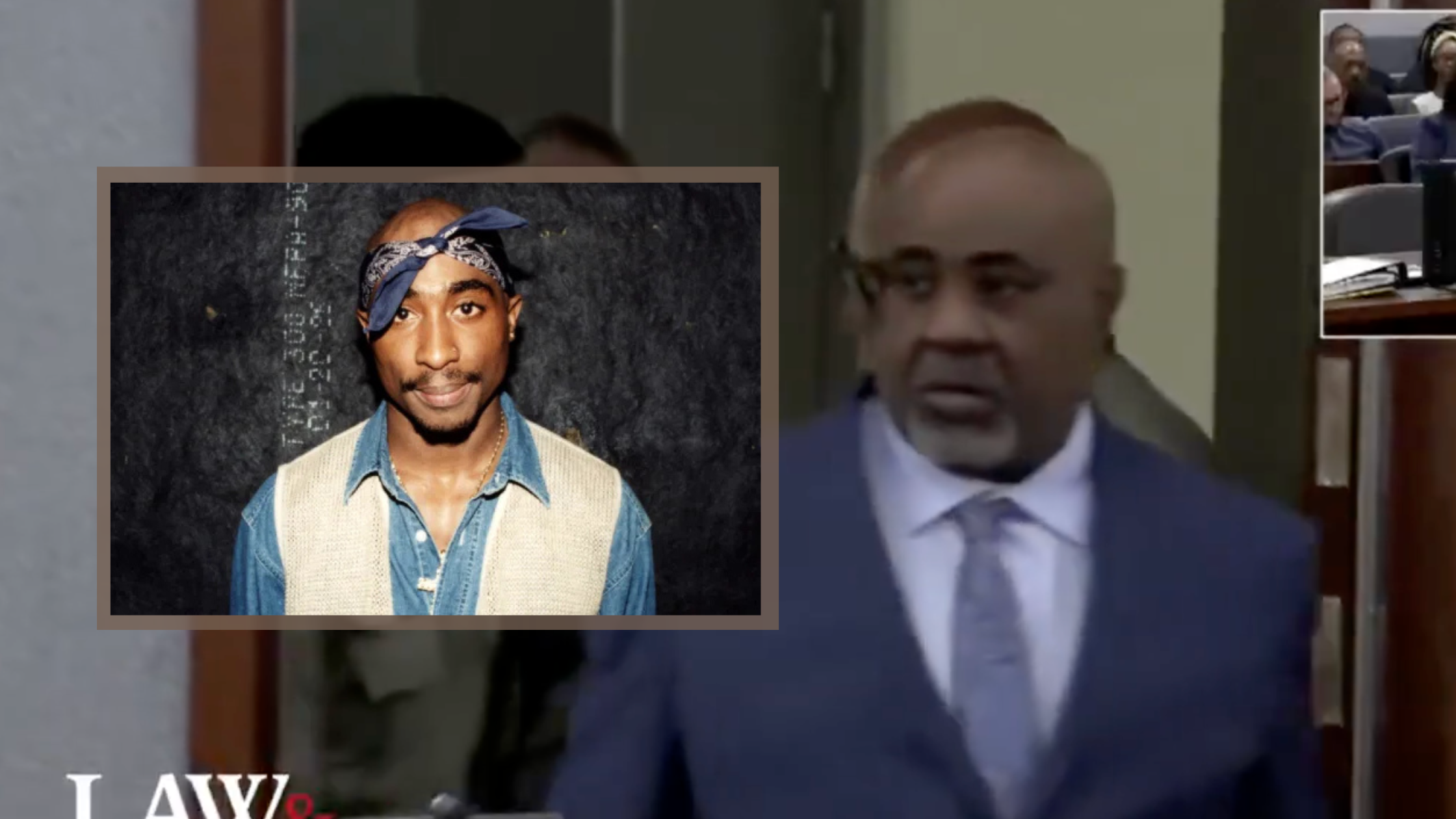
Nearly 30 years after Tupac Shakur’s murder, a Las Vegas jury will hear the case against the only man prosecutors have charged in connection with his death. Opening statements began Monday (August 17) in the trial of Duane “Keffe D” Davis, 63, who faces a murder charge for his alleged role in the September 1996 drive-by shooting. Davis has pleaded not guilty.
Shakur was 25 when a gunman opened fire on the BMW he rode in near the Las Vegas Strip on Sept. 7, 1996. Death Row Records co-founder Marion “Suge” Knight drove the car and survived the attack. Shakur died six days later.
Prosecutors Point to Davis’ Own Accounts
Duane "Keefe D" Davis' trial for the 1996 murder of Tupac Shakur has officially begun, with opening arguments being presented today ⚖️
— HotNewHipHop (@HotNewHipHop) August 17, 2026
Keefe D is accused of orchestrating Tupac's murder and could potentially face life in prison if found guilty.
Head to the link below to find… pic.twitter.com/9oN5Eq0n5l
Prosecutors argue that Davis helped orchestrate the shooting following a confrontation earlier that night. Shakur, Knight and members of their entourage had attacked Davis’ nephew, Orlando Anderson, at the MGM Grand after a Mike Tyson fight.
According to prosecutors, Davis later obtained a .40-caliber Glock pistol and passed it to an associate before the group located Shakur’s car. Prosecutors do not accuse Davis of firing the fatal shots, but they say he helped set the attack in motion.
Davis’ own words could play a major role in the case. He discussed the killing in interviews and detailed the night in his 2019 memoir, Compton Street Legend.
“In this world, silence means survival,” prosecutor Binu Palal told jurors. “The one person who has had a hard time being silent is Duane Davis.”
The Defense Challenges the Evidence
Tupac Shakur was gunned down in 1996. Nearly 30 years later, a man accused of helping orchestrate his murder is going on trial Monday. Here's what to know.https://t.co/Rq7HIsPjbu
— TIME (@TIME) August 16, 2026
Defense attorney Michael Sanft argues that prosecutors lack physical evidence connecting Davis to the murder. Instead, he says Davis previously exaggerated his involvement to profit from the attention surrounding the case.
“There are no facts to point to Keffe, not one,” Sanft told jurors.
The competing arguments leave jurors with a central question: How much weight should they give Davis’ own stories?
After decades of theories, documentaries and speculation surrounding one of hip-hop’s most infamous murders, the case has finally reached a jury. The trial could bring a long-awaited legal conclusion to a killing that has remained part of hip-hop history for nearly three decades.